
Common Foods That Can Affect Warfarin Levels:
Warfarin is a blood thinner used to prevent harmful blood clots. It works by interfering with vitamin K, a nutrient your body uses to form clots. Because of this, what you eat can influence how well warfarin works.
The key is not to avoid healthy foods, but to keep your diet consistent. Sudden changes in certain foods can cause your blood to become either too thin (increasing bleeding risk) or too thick (increasing clot risk). This is why regular INR monitoring is essential.
Foods High in Vitamin K:
Foods rich in vitamin K can reduce the effect of warfarin if their intake suddenly increases.
Common examples include:
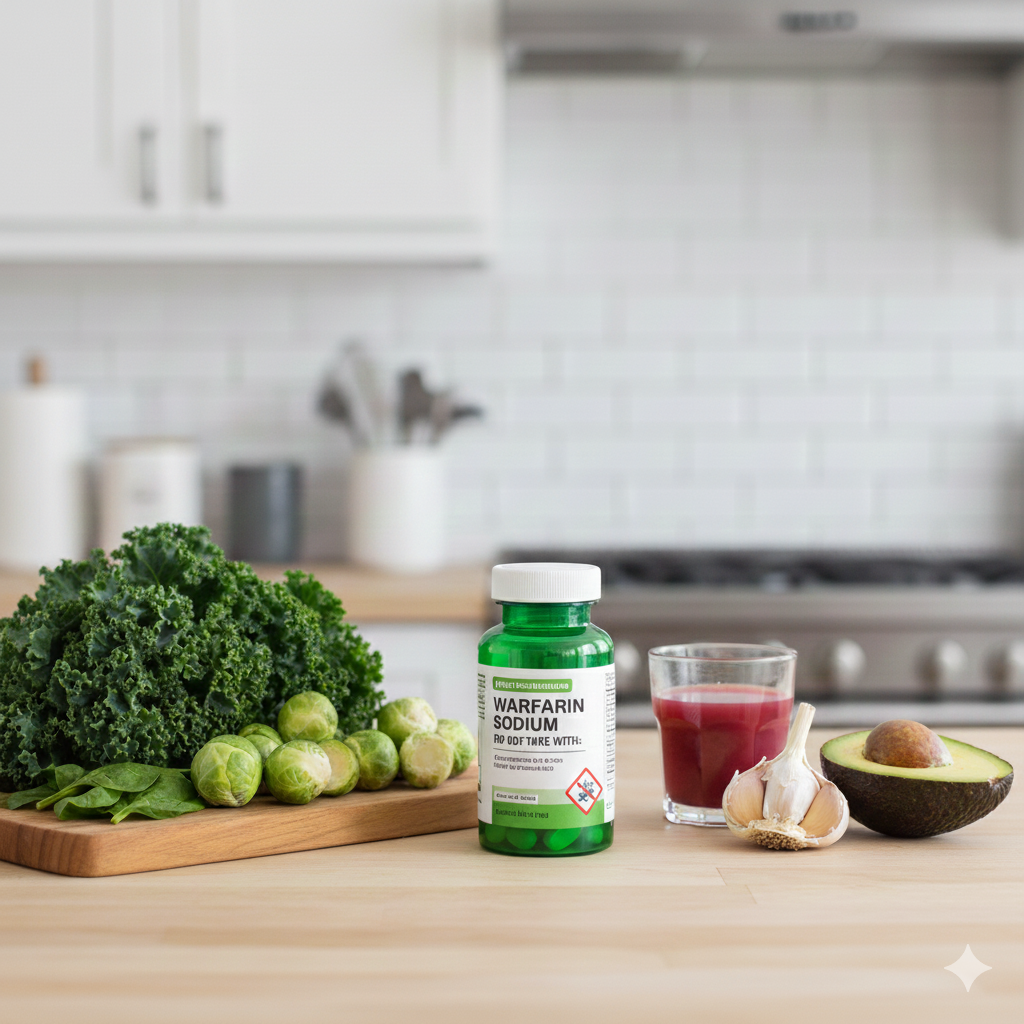
- Green leafy vegetables: spinach, kale, lettuce, mustard greens
- Other vegetables: broccoli, cabbage, Brussels sprouts
- Herbs: parsley, coriander (cilantro)
- Oils: soybean oil, canola oil
👉 You do not need to stop eating these foods.
👉 The goal is to eat similar amounts regularly, rather than making sudden changes.
Foods and Supplements That May Reduce Warfarin’s Effect
Certain items may lower INR, particularly if intake increases suddenly:
- Large amounts of green tea (contains vitamin K)
- St. John’s Wort supplement
- Vitamin K supplements
- Sudden increase in vitamin K–rich foods
Consistency matters more than restriction.
Why Diet Consistency Matters:
- More vitamin K suddenly → warfarin works less → higher clot risk
- Less vitamin K suddenly → warfarin works more → higher bleeding risk
A stable routine helps keep your INR within the target range.
Tips for Eating Safely While on Warfarin
Do:
- Keep your daily diet consistent
- Attend INR tests as scheduled
- Inform your healthcare provider about diet or supplement changes
Don’t:
- Make sudden major dietary changes
- Start herbal products without medical advice
- Skip INR tests or stop medication on your own
When to Seek Medical Advice
Contact your healthcare provider if you notice:
- Unusual or frequent bruising
- Bleeding that doesn’t stop
- Blood in urine or stool
- Severe headache, dizziness, or weakness
Take Home Message:
You can continue eating healthy foods while taking warfarin.
Consistency, regular INR monitoring, and open communication with your healthcare team are the most important factors for safe treatment.
Written By: Anzila Waseem
Reviewed By: Nida Najmi